
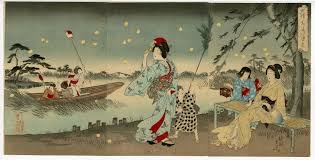
“Who knows that in the depth of the ravine of the mountain
of my hidden heart a firefly of my love is aflame.
Abutsu-Nu
“Who knows that in the depth of the ravine of the mountain
of my hidden heart a firefly of my love is aflame.
Abutsu-Nu

I. Individual Consultation
With emphasis on individual, group and creative wellness, A Writer’s Life provides a structure and support for a consistent writing practice that includes writing, reading, revising, workshopping, building and maintaining writer’s community and partnerships, and publishing and promoting the creative work produced
Monday & Tuesday-Thursday & Friday
Fee: $35-85.00 per session Pay Here with PayPal OR www.venmo.com/Andrea-Canaan-1
Monetary remuneration reflects the value of the services received and delivered, and the commitment to our writing practices, and tending our writing to its full purpose in the world. Please contact me with all payment issues.
A Writer’s Life
Andrea R. Canaan, MSW, MFA
415-515-5943
II.
Writers Group
Every Wednesday
1:00-2:30 pm PST- 4:00-5:30 pm EST
“And then the day came when the risk to remain tight as a bud was more painful than the risk to bloom.”
– Anais Nin
Fees: Sliding Scale $15-$25
Monetary remuneration reflects the value of the services received and delivered, and the commitment to our writing practices, and tending our writing to its full purpose in the world. Please contact me with all payment thoughts and questions.
Pay Here with PayPal OR www.venmo.com/Andrea-Canaan-1
Call-Text OR Email Andrea for Link
A Writer’s Life
Andrea R. Canaan, MSW, MFA
415-515-5943

III.
Expanded Writing Group
2nd & 4th Thursdays 3:30 pm – 5:30 pm
Writers with Longer Creative Writing Projects

“I’m a believer in the power of knowledge and the ferocity of beauty, so from my point of view, your life is already artful—waiting, just waiting, for you to make it art.”
Sliding Scale: $15-25.00 Pay Here with PayPal OR www.venmo.com/Andrea-Canaan-1
Monetary remuneration reflects the values of the services delivered and received, assures that the teaching, guidance and support received is sustainable for me, and the insistence that your writing blooms into its full purpose in the world. Please contact me with all payment thoughts and questions.
A Writer’s Life
Andrea R. Canaan, MSW, MFA
415-515-5943
415.515.5943
IV.
Women of Color Writing Group
2nd & 4th Saturdays, 1:00 pm-3:00 pm PST – 4:00 pm-6 pm EST
Indigenous, African, American Women of Color, Asian, Immigrant, documented and undocumented, Latin, Middle Eastern, and Pacific Islander, All Women of Color are welcome.
Preserving Women’s wellness and creative space for writers to share creative process, to build and sustain Women of Color writing community, and to share and teach coping and liberating strategies to conquer sexism, racism, ableism, colorism, anti-Semitism, Islamophobia and other systems of structural oppression while living liberating and joyful lives.
This group is a closed group. Open to women of color by invitation only.
Writing Group: $15-25 per group. Pay Here with PayPal OR www.venmo.com/Andrea-Canaan-1
Monetary remuneration reflects the values of the services delivered and received, assures that the teaching, guidance and support received is sustainable for me, and the insistence that your writing blooms into its full purpose in the world. Please contact me with all payment thoughts and questions.
A Writer’s Life
Andrea R. Canaan, MSW, MFA
415-515-5943
V.
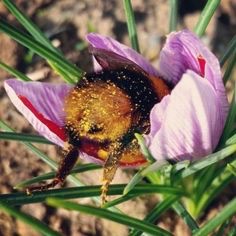
Bumble Bee Butt Your Book??!!
June 6, 2021 at Noon PST 3:00-4:30 EST
What?!! Share a book that has touched you, changed you, other people must read!
Why?! Because it’s Ridiculous & Fun &Free & About Books & You get a Prize!!!!
When? June 6, 2021 at Noon PST 3:00-4:30 EST
Where? At Verve:1231 Courtland Ave. S.F, Ca. 94110 & On ZOOM
Only 12 In Person Spaces Available. More spaces available virtually.
Call or Text or Email to Reserve your Place.
No Fee
Prizes will be mailed to those who cannot Bumblebee Butt in person.
Questions? I’ve Got Some Answers.
A Writer’s Life
Andrea R. Canaan, MSW, MFA
415-515-5943

VI.
Women Writing in Concert
Saturday, August 7, 2021 10:00-11:30 am PST-1:00-2:30
Women writers will join to create a collaborative writing work of art.
Verve Wellness Center At Verve:1231 Courtland Ave. S.F, Ca. 94110
& On Zoom
Only 12 On Person Spaces Available. More spaces available virtually.
Call or Text or Email to Reserve your Place.
No Fee
A Writer’s Life
Andrea R. Canaan, MSW, MFA
415-515-5943
VII.
Summer Reading
Thursday, July 22, 2021 4:00-5:30 pm PST- 7:00-6:30 EST
On Zoom
No Fee
Andrea R. Canaan, MSW, MF
415-515-5943
VIII.
Mini Writing Camp
Saturday and Sunday, September 18th and 19th, 2021.10 am- 4 pm PST
At Verve Wellness Studio
1231 Courtland Avenue, San Francisco, California 94110
Genres: Poetry, Nonfiction (shorter–longer) Historical, Science & Speculative Fiction.
Writing Projects: Shorter and Longer
Register early with a deposit of $100.00
Fees: Sliding Scale $175.00-$225.00
Maxim Capacity: 12 Pay Here with PayPal OR Venmo
A Writer’s Life
Andrea R. Canaan, MSW, MFA
415-515-5943

IX.
Indigenous, Black, Latina, Asian, All Women of Color
Writer’s Camp in Windsor, California

October 28, 29, 30, 31, 2021
Genres: Poetry, Nonfiction (shorter–longer) Historical, Science & Speculative Fiction,
Journal writing, Letters, Milestone Writing, Travel Writing, Letters to the Editor, Love Letters,
Break Up Letters, Marriage Vows, Obituaries, Prayers, Songs, etc.
Writing Projects: Shorter and Longer
Fees: Sliding Scale $400-550. Do not allow money to stop you from attending.
Give me a call. Let’s work it out.
Maximum Number of Participants: 12
Register early with a deposit of $100.00 into: Pay Here with PayPal OR Venmo
A Writer’s Life
Andrea R. Canaan, MSW, MFA
415.515.5943

How can you follow the course of your life if you do not let it flow?
– Lao – Tuzla
“Struggle is a never ending process. Freedom is never really won,
you earn it and win it in every generation.”
– Coretta Scott King

To journey without being changed is to be a nomad
To change without journeying is to be a chameleon
To journey and be transformed by the journey is to be a pilgrim.
–Nepo
By the time I was nineteen years old, I had moved eleven times. I became a walker, a wanderer, journeying in the city of my birth. I walked while I read the books I checked out of my school and city library. I read in my neighborhood cemeteries for the peace and quiet I found there. I walked among segregated colored neighborhoods filled with teachers and cooks, doctors and lawyers, jazz musicians and ministers, stevedores, and bricklayers, maids and gardeners, beauticians, barbers, middle class, working class, working poor, and no class poor. Most rented falling down crowded tenements owned by slumlords, mostly white slumlords, some black. Some lived in neighborhoods call Uptown, Back-a-town, Hollygrove, Black Pearl, Downtown, and Lower Nine on streets named LaSalle, Simon Bolivar, Terpsichore, and Elysian Fields. Some lived in new newly built federal housing projects named Magnolia, Desire, Lafitte, and Calliope. All were built in the same segrefated neighborhoods because the color lines were enforced no matter the economic, education, or class status.
The people who lived in my neighborhoods were of enslaved, Freedmen, Creole and immigrant heritages who had lived in New Orleans, it seemed, always, as if the history of the middle passage and killing fields of cotton, sugar cane, and indigo, were no farther away than now. Most were brown darkening to the blackest black. Some were light, some very light, some passe blanc. Many came from the rural and coastal towns of Arkansas, Florida, Alabama, Mississippi, and Texas with harsh southern accents that harmonized into a New Orleans black patois. Although, I did not understand the impact and importance of this when I was five and seven, and nine, and even when I was thirteen and fourteen, New Orleans was also filled with people who had immigrated from Cuba, Venezuela, French and Spanish Honduras, Granada, Haiti, Brazil, and other Caribbean, and South and Central American countries to find color a harsh implacable barrier that completely eclipsed class, language, education, and religion or national origin. When they arrived with skin darker than condensed milk they were forced to assimilate into blackness. Their shapes, sizes, colors, gestures, smiles, hearty laughs, music, and stories, in different languages, yet the same language, different beats, yet all syncopated and repeated in the heart, passing through the bone’s marrow and cells evolving nucleus, imprinted me with belonging and a full vibrant tapestry of who I was.
These peoples were all simple and complex variations of black to me, light, dark, very dark, near white, pass for white, Latin, Creole, Spanish, French, Negros, Colored, were all Black people to me. For a long time I did not, could not, distinguish them, separate them. Even when I knew better, even when I understood most never wanted to be black, would never have chosen to be black, they simply had no other choice at that time in the segregated south. I also understood they belonged to me and I to them, their place was my place, their voice, mine, their history and plight, mine, their joy and sorrow, mine, their diaspora, mine.
I read while walking these neighborhoods rather than in the small, noisy, always busy and cramped, two-bedroom apartment in the Magnolia Project where I lived with my grandmother, mother, two older brothers and one older sister. I dreamed while I walked. I wrote stories in my head while I walked. I sang the opera and spirituals my mother and sister sang while I walked. I sang the Methodist hymns like the Methodists sang them and the Baptist hymns like the Baptists sang then, while I walked.
I often crossed a tree lined avenue or to the other side of a cemetery or a trolley track, whatever the demarcation line, and found myself among the homes my family and neighbors worked in, the yards they mowed and raked, the lines of clothes they had washed, hung up, taken down and ironed, the children they tended to and raised, the floors they swept, mopped and waxed, the windows they cleaned, and the cars they polished and chauffeured. And when I crossed back again I sang the forbidden jazz standards and the low–down blues I heard on our street corners, coming from inside bar rooms, and on the radio as I walked. And I listened to the radio turned down low in the middle of the night when everyone was sleeping and my mother was working the graveyard shift at Charity Hospital as a nurse aid with music crackling and hissing from Memphis and Chicago.
Between the ages of eleven and nineteen I was sexually molested by a very prominent Methodist minister. The worst of the abuse began when I was fifteen. He was one of the most powerful black ministers in New Orleans, in Louisiana actually. He was a Civil Rights leader. He was revered and valued. His penchant for young girls was also known. When this man came into my life I lost my mother for a time. She consciously or unconsciously agreed to and benefited from his control of me. I lost my church, Sunday school, choir, MYF, (Methodist Youth Fellowship) my closest friends and eventually my faith. The church knew. Everyone knew. Many blamed me and shunned me. Some blamed him and shunned me still. No one stopped him. Not until I did. And even then, it was not over. Slowly, slowly, I became a ghost in all the neighborhoods I had wandered in. I lost myself. I lost my place. I no longer belonged.
I moved away from the city of my birth for the first time when I was thirty–years– old. I have crossed this country south to west, west to east, and east to west again, five times. I have constantly tried to account for this wandering. Why move, make roots again, make writer and artist community again, make activist and teaching communities again, make friendships that deepen into named family and move again, far away again?
When I read Matsuo Basho’s Narrow Road to the Interior, I recognized his journey as a journey of belonging. I recognized Basho as a pilgrim on a sacred journey to Japan’s interior and his own internal self. Basho modeled and taught himself, and me, ways to journey to the interior spaces of the self, physical places, spiritual places, singular places, and collective and collaborative places to visit and transform journeying into being and belonging. He modeled spiritual, philosophical, literary, social and artistic practices and disciplines, and questing in the journey to self and the worlds we inhabit, what once was, what now simply is, while honoring all. I recognized his pilgrim’s journey of walking thousands of miles in his lifetime as sacred journeys of belonging. I recognized on a deeply emotional and cellular level my own journeying.
Basho left poetry at road crossings, at temple gates, on the tables of his hosts, and upon stones on battlefields. The poem was an offering, a milestone, a beacon, a point on a map, a respite, a soothing drink, a tonic. He immortalized a marshland field of irises that he made arduous detours in his travels to visit.
あやめ草足に結ばん草鞋の緒
Ayamegusa asi ni musuban waraji no o
I will bind iris
Blossoms round my feet―
Cords for my sandals!
–Donald Keene translation.
Basho carries the honorific of Father of Haiku. Haiku is traced back to Renga: Linked poetry of various types, usually with two or more poets participating in its creation. The most common type, which flourished in the fourteenth and fifteenth centuries, consisted of one hundred verses that alternately had seventeen and fourteen syllables each. Derived from courtly Waka, traditional verse form consisting of 5-7-577 syllable pattern, Renga at first producing an elegant, graceful mood through its subject matter and style, until a more plebeian variety, Haikai No Renga or Haikai emerged in the sixteenth century. – Glossary; Mokoto Uedo; Basho and His Interpreters, Stanford University Press; 1991.
On his journey Basho participated in this collaborative poetry making with poets in the areas of his travels. It is the way he modeled and practiced the art of collaborative poetry making, of linking and threading, back and forward, in and out of place and time, within each individual poet, with each individual part of the poem being written, the poem then read, then discussed, and finally linked to the others, making a whole, engaging the community body of artists’ shared experience to transform individual poets into collective and into wholer art. What has remained of this art form today is haiku, what had once been only the first lines of the Renga.
All of the neighborhoods I grew up in were drowned and washed away by Hurricane Katrina. They were later bulldozed into empty grids that turned to weeded city lots until the developers, long awaiting such a catastrophe, continue to claim them. Most of the poor and working-class people, who did not own homes, no longer live in New Orleans. The housing projects that housed the working poor who labored on behalf of the city, were torn down, even housing that was not damaged by the storm, to make sure poor, mostly black, people did not return. Mt. Zion United Methodist Church, where I once belonged, has been remodeled and reopened for worship. The nephew of the minister who abused me became a Bishop of the United Methodist Church is Arizona. He is the only adult, in my life during those times, who corroborated my experience, made amends for his silence and inaction, and allowed my heart and mind clarity and safe passage after years of seasons of near madness.
Basho, this Japanese man, born in 1692, touched deeply into me, into my journey as a writer, as an inheritor of repeated histories upon my mind, body and heart, some my own, many, the linked journeys through the Magnolia Project, New Orleans, South Louisiana, interior and costal Mississippi. Basho’s journey informed, disentangled and has helped make sense and meaning of my own journeying. I am deeply humbled by his writing as a daily practice of living, for the welcoming and leave taking, for the recording and noticing, for daily celebration and delight, for the deepest spiritual knowings, for embracing and enduring constant deprivation and fear, for searching and searching for the places and spaces known to have existed and finding many of them, and most of all for connecting with other poets, writers and sojourners, sacred places, nature, and divinity, while also constantly making art and history in community.
I am truly blessed and increased by Basho’s journey.
Andrea R. Canaan 2016 –Revised 2021
We lose ourselves to darkness when we deny ourselves Joy.

And then the day came when the risk to remain tight as a bud
was more painful than the risk to bloom.
– Anais Nin

No bird can fly with our opening its wings, and no one can love
without exposing their heart.
– Mark Nepo
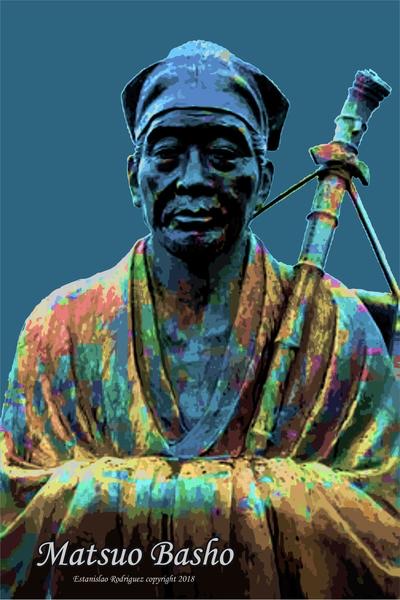
“There is nothing you can see that is not a flower; there is nothing you can think that is not the moon.
Do not seek to follow in the footsteps of the wise. Seek what they sought.
Every day is a journey, and the journey itself is home.”
– Matsuo Bashō

The purpose of art is to lay bare the questions hidden by the answers.
– James Baldwin
 A Writer's Life