

“Who can say how many lives have been saved by books?”
–Michelle Cliff
“Who can say how many lives have been saved by books?”
–Michelle Cliff

Do I want to live? Do I really
want to live with every sense,
in each moment, vibrantly alive?
Do I want to feel from the marrow
of my bones out to the last millimeter of
peel of skin?
Do I want to be touched by sun,
embraced by racing briny air?
Do I want to see the effervescence
of a hovering hummingbird’s
feathers?
Do I want to witness a sun rising
shimmering red–orange orb
out of night, or pinking blushing
and purpling into sinking gold below
the horizon or beyond a mountain or
into the sea?
Do I want to hear the morning sounds
of honking migrating birds, mourning
doves in the eaves, or the whispering
to howling of hurricane winds?
Do I want the up and down,
before and after, beneath and above
within to return to balance, undeviating?
Do I want to love, allow all the way in
surrendered, entered, seen, known, without
glamor or mask or armor?
Do I want to laugh and weep and wail and
dance and swim and sail and walk and climb
and, and, and?
Do I want to honor the ancestors
the spirits, invite them to our
tables, say their names out loud,
tell their stories and ease their
haunting embrace their holding ?
Do I want to heal what had been
broken and make of every broken place
brilliant knowings and wealth?
Do I want to place on funeral pyres
what is no longer of use, was never
of use, was always perjury placed
in the way by avarice and misogynoir?
Do I want to love myself enough
to conceive and carry myself
to labor and birth myself, to succor
and nurture myself anew and
to earn my own life?
And should I want to live
Will I decide to live and if
I decide to live will I
Insist on living joy?
I do. I do.
© Andrea Canaan
Rio Vista, California
October 3, 2020
Joy Is What We Do
The Johns Hopkins CSSE dashboard reported 6.69 million U.S. cases and 198,055 deaths as of 1:30 pm EDT on September 18, 2020
– From Johns Hopkins daily update.
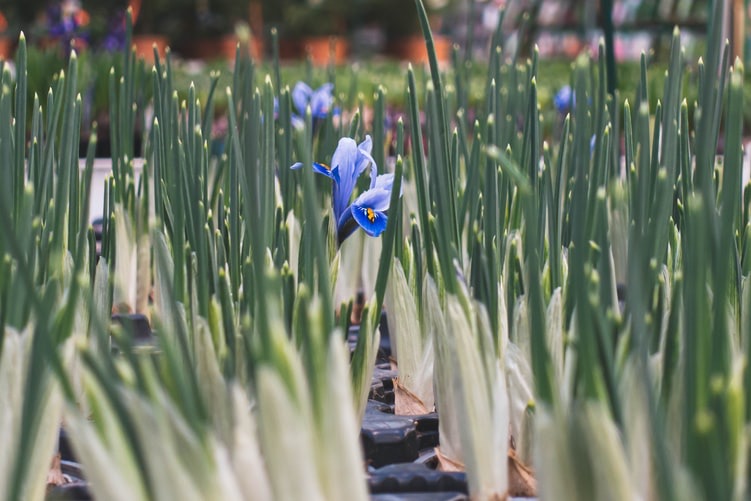
On Sunday, September 20, 2020, the death toll passed 200.000 deaths in the U.S.
Notorious RBG
It’s been a hard few days for me. We placed purple ribbons on the trees in our front yard in memorial for John Lewis and planned to take them off after ninety days, the amount of time my family traditionally mourns our beloved ones’ passing. The color purple, in keeping with the Lewis family’s wish represents our rededication to supporting the search for cures and treatment of pancreatic and all cancers.
The death of Ruth Bader Ginsburg has taken me out for two days. I turned off the TV and took to my bed, tea and toast only as I hushed out everyone’s fear for ourselves now that she is gone–all of us who wanted her to postpone her retirement and endure suffering while holding onto the job of a Supreme for us. That some of us lamented that she did not hold on, suffer longer for us, made me sick, literally. I held her as she passed. I sat in the garden and sang to her against all my wanting to clutch, to cling, to hold on.
I am not a Jew, yet she is mine to mourn. I am not white, yet she is mine to mourn. I am not straight, yet she is mine to mourn. I am not a cancer survivor, yet she is mine to mourn. I am not a Supreme Court Justice or a Supreme Court clerk, yet she is mine to mourn. I am not her family, her friend, or beloved to her, yet she is mine to mourn. Ruth Bader Ginsberg is mine to love and honor and mourn.
It All Makes Me Sick
I was not surprised that my gut revolted. I felt nauseous and needed only stillness and quiet in the face of combined assaults–Covid -19, the isolation and extreme care it requires of all of us, more than 200,000 deaths, millions sick and recovering with untold long-term effects, glaciers calving, hurricanes–double hurricanes–coming, hundreds of fires and toxic unbreathable air. And black lives, women’s lives, immigrants’ lives, the lives of people with pre-existing conditions, LGBTQ, all these lives not mattering. And the sowing of hate, confusion, and misinformation. And the intentional diminishment of the U. S. Postal Service for naked political gain. No wonder I am made sick. We are made sick.
What do we do?
And we must mourn, during these times our government has chosen to allow Covid-19 to ravage our borders unmasked, untested, un trace and , we must count the dead a murdered. We must protect and preserve our lives and not forget the dead, the dying, the sick and those of us forever changed by Covid_19. Put aside a moments(s) each day y to acknowledge and be grateful for their time with us and grieve another thousand dead today and tomorrow, another child, mother, father, sister, brother, lover… gone, seventy–five percent of our beloved’s deaths preventable, all of us devastated and in mourning.
Tribute to Supreme Court Justice, Ruth Bader Ginsberg
And what else do we do?
Joy is What We Do
Now, right now, we must live our lives consciously, conscientiously, concretely, constructively, like the Marge Piercy Poem, To Have Without Holding. We must make life-giving use of everything in us that that struggles, survives and triumphs over that which hurts us, divides us, attempts to kill us. We mix the poultices, soups and teas from the herbs of our mother’s and grandmother’s gardens. We bathe and soak in the scents of healing salts and herbs. We pray, and meditate, and dance, and drum, and sing.
We make our homes and our close circles as healthy and whole and welcoming and nurturing as womanly and humanly possible. We love each other and touch each other in every way we can. We listen to each other. We hear each other. We forgive each other. We reconcile with each other. We eat and move and pray and sleep and wake up in the arc of each other’s love.
We take requisite care in every part of our lives that we have control of, our hearts, bodies, minds, souls, our work, our creativity, our contributions of money, time, and resources, whatever they may be.
We insist on joy–yes, joy– in these times that call out for us to go deaf, dumb, blind, and silent in self-loathing and hatefulness because of our complicity in our own undoing and death.
We bask in joy every time the morning comes, a child laughs, our meals are prepared in love, our small circle of friends and family gather physically, but not socially, distanced, and every time nature shows herself vibrant abandon.
We require joy in every privileged breath we take, clean water we drink, and safe passages we happen to have because of race, class, education, age, gender, immigration status, faith practice, affectional preference, however, relative they may be, and we gladly acknowledge our power and share our advantage with those not privileged by systemic racism, misogynoir, anti-Semitism, xenophobia……
We command joy in the presence of all that there is to rationally fear, despair, and give up on.
We prepare, and make, and consume, and share this compulsion to live, to be the antidote, joy, physical, emotional, creative, sexual, sensual, psychic and spiritual joy, for and with ourselves and each other.
We loving ourselves. We find the joy that is always as much available to us as are our rational fears, our past and current pain, and the disabling forces that besiege us all.
Joy is an antitoxin, a serum, a counter-measure, a cure for physical and emotional violence and disabling disempowerment.
Joy delivers breath to our cells and transforms our breath into fuel that awakens and enlivens us to create just and free lives and more joy.
And what else do we do?
We write, we create, and we tell the stories.
Justice Ruth Bader Ginsberg on The Heroic Visionary Women of Passover
And what else?
We Get in Good Trouble
Speak Up, condemn speech that is bigoted or hateful. Confront, acknowledge, apologize, and change these behaviors within ourselves, always, always, first, within ourselves.
Become a Racial Equity Broker
“If you are not at the table, you are on the menu and someone is eating you for lunch,” Shirley Chisolm said. She also said,” If they don’t give you a seat at the table, bring a folding chair.”
Never Give Up
John Lewis taught us persistence. He taught us …”when a person has transformative ideas, they should not taper those ideas. Instead, they should persist. Simply because change is slow does not mean change agents have to move slowly towards it.”
First and second and third, we must find ways to act in authentic, powerful, and productive ways to preserve and advance our own lives.
Next and next and next, do everything we can do to positively, productively, lovingly and proactively impact the lives of our families, neighbors, communities, country, our world with the urgency and ferocity fuels our insistence on life and joy. Give thought, time, resources, and acts of assistance and resistance. Learn and use the tools of activism and the democratic defense of our own bodies, our nation, and our world.
We Vote.
We research and know the rules and options in our state and town for voting, and we make a plan, and we make an alternative plan, and we make a backup plan to our alternative plan.
We vote early in person or by mail. We send out ballot through the mail or we deliver our ballot in person into a ballot box provided by our election board.
Or we vote in person on Tuesday, November 3, 2020, and we wear masks and stay physically distant and bring food and drink and needed medication, and an umbrella, and wear comfortable shoes, andwear to keep us warmed or cool, and bring something to sit on, and charge our devices fully, and bring an external charger, and bring all our family and friends. And those of us who are able volunteer to give rides and pickups for our elders and others needing assistance, and send gentle reminders, and follow up those reminders with another reminder with love and kindness, and do everything we can to be sure all of our votes count, because joy is what we do.
A Love Song for You
Allow this song in your body, mind and heart as if you are singing it you yourself and lifting yourself up.
Me, Myself, and I, Randy Crawford. Randy Crawford & Joe Sample – Me my self and i – YouTube
I go down my to-do list of self-care: meditate, eat well, rest well, get exercise, connect, connect, connect, stay home–except for the pharmacy & the grocery & then only with a mask. Watch less TV, but stay informed. Read and study more. Laugh a lot. Channel fear, grief, and rage into expression, action, and art. I continue to chronicle these times.
In Joy and Doing,
A
© Andrea Canaan, MSW, MFA
Monday, August 3, 2020
The Johns Hopkins CSSE dashboard reported 4.68 million US cases and 154,992 deaths as of 12:45pm on August 3.
Walking with The Wind
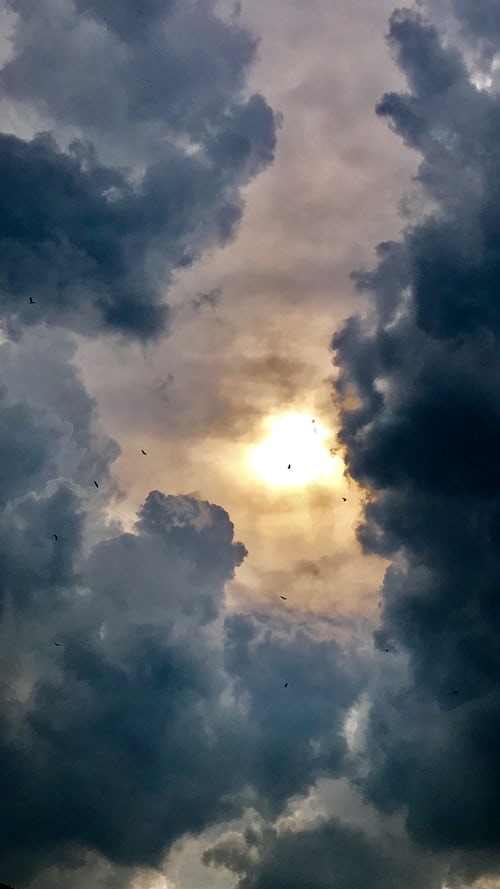
An artist’s duty is to reflect the times.
-Nina Simone
A friend wrote to me. ”I’m envious of the motivation and persistence that keeps you writing during these times.”
I wrote back to her, “I don’t know what the difference is now exactly.”
I allow her question in. I felt a writing paralysis during 911. I felt it during the multiplicity of the killings of black and brown people long before now. I felt it when my country elected a sociopath as its leader and every moment since.”
I find sustenance and example in John Lewis’ Walking with the Wind: A Memoir of the Movement
About fifteen of us children were outside my aunt Seneva’s house, playing in her dirt yard. The sky began clouding over, the wind started picking up, lightning flashed far off in the distance, and suddenly I wasn’t thinking about playing anymore; I was terrified…
Aunt Seneva was the only adult around, and as the sky blackened and the wind grew stronger, she herded us all inside.
Her house was not the biggest place around, and it seemed even smaller with so many children squeezed inside. Small and surprisingly quiet. All of the shouting and laughter that had been going on earlier, outside, had stopped. The wind was howling now, and the house was starting to shake. We were scared. Even Aunt Seneva was scared.
And then it got worse. Now the house was beginning to sway. The wood plank flooring beneath us began to bend. And then, a corner of the room started lifting up.
I couldn’t believe what I was seeing. None of us could. This storm was actually pulling the house toward the sky. With us inside it.
That was when Aunt Seneva told us to clasp hands. Line up and hold hands, she said, and we did as we were told. Then she had us walk as a group toward the corner of the room that was rising. From the kitchen to the front of the house we walked, the wind screaming outside, sheets of rain beating on the tin roof. Then we walked back in the other direction, as another end of the house began to lift.
And so it went, back and forth, fifteen children walking with the wind, holding that trembling house down with the weight of our small bodies.
More than half a century has passed since that day, and it has struck me more than once over those many years that our society is not unlike the children in that house, rocked again and again by the winds of one storm or another, the walls around us seeming at times as if they might fly apart.
It seemed that way in the 1960s, at the height of the civil rights movement, when America itself felt as if it might burst at the seams—so much tension, so many storms. But the people of conscience never left the house. They never ran away. They stayed, they came together and they did the best they could, clasping hands and moving toward the corner of the house that was the weakest.
And then another corner would lift, and we would go there. And eventually, inevitably, the storm would settle, and the house would still stand. But we knew another storm would come, and we would have to do it all over again. And we did. And we still do, all of us. You and I.
Children holding hands, walking with the wind. . . .
I go down my to-do list of self-care: meditate, eat well, rest well, get exercise, connect, connect, connect, stay home–except for the pharmacy & the grocery & then only with a mask. Watch less T.V., but stay informed. Read and study more. Laugh a lot. Channel fear, grief, and rage into expression, action, and art.
I listen to Amazing Grace sung at John Lewis’ funeral service.
I continue to chronicle these times.
In Joy and Doing,
A
© Andrea Canaan, MSW, MFA
Edited version read at A Writer’s Life Summer Reading

An excruciating pain ran along my lower back, down the sides of my legs, and exploded in an agonizing jangling of nerve endings on fire. It began just before a five–hour plane ride and later, a four–hour drive to a writing residency. I had this travel with grueling pain on my return. A doctor diagnosed sciatica. The treatment was pain killers that made me sleepy and foggy, ice packs, and lying very-very still in between workshops, performances, and master classes. The excruciating pain began to recede slowly in the weeks after I returned home. I was delighted when I was able to restart my swimming regimen, forty-five minutes each morning, five days a week.
On my way to the pool the first day the sciatic pain allowed me to, Bessie Smith sang on the CD player in my car. When she began singing Careless Love, inexplicably, I began to cry. I pulled the car over to compose myself. I puzzled over why I was crying. I pushed a button and placed Careless Love on repeat. I listened to Bessie Smith sing this song three more times. The piano holding the melodic line and swinging the pace along lulled me close to this altar of sound. The trombone growling low and keeping syncopated time with the high sound of the trumpet repeating and embellishing Bessie Smith’s voice opened and washed through me.
I’ve heard this song in the background of my life in New Orleans. I listened on thirty–eight records, albums, blues and jazz radio stations, instrumental jazz versions played during jazz funerals and street parades, and in blues and jazz night clubs.
Love, oh love, oh careless love.
You fly through my head like wine.
You’ve wrecked the life of many a poor girl
And nearly spoiled this life of mine.
My throat and chest kept tightening and swelling. Tears kept spilling and dripping to the edge of my grief and rage. I knew this song. I knew the places the sounds and emotions came from. The song of was of betrayal, but worse, self– betrayal.
Love, oh love, oh careless love.
In your clutches of desire
You’ve made break a many true vow,
Then set my very soul on fire.
On that February morning in 2016, I felt betrayed by my country, betrayed by what Donald Trump represented as a nominee for the president of the United States of America. But much–more elementally, I felt my ancestors, African slaves and free people of color, had allowed themselves to be seduced and duped by the ideas and promises of the United States Constitution all of its amendments, declarations, and pledges, along with all its Judeo-Christian morality.
Bessie Smith’s voice, the wail of the trumpet, the moan of the trombone, and the melodic swing of the piano uncovered layer upon layer of the consequences of the United States of America’s carelessness within me. Promises of acceptance and equality coated in beguiling lies and inducements that were wrapped in forced dependence, self–exploitation, and unspeakable violence waiting at the ends of billy clubs, fire hoses, and ropes. I imagined generations of slaves and former slaves laying twisted and shattered or hung while smiling faces spoke to the terrified bereaved of boot straps, resilience, the healing power of forgiveness, and the faults and responsibilities of the vanquished for their degradations and deaths, those never fully human, those never white.
In the water, my first day back, I felt physically, emotionally, and spiritually connected again. The searing electric pain, I had been experiencing had dimmed to a faint whisper. I looked forward to the peace and rest of my sweeping movements propelled by my breath and heart.
Before I entered the pool, I saw the white woman, whose name I didn’t know, who had insisted, I shouldn’t be allowed to have access to the lap lane, so she could occupy it alone, even though she herself was not a lap swimmer. The woman came to the pool with swim shoes, swim gloves, a buoyant device wrapped around her waist, and exercised in one corner of the lap swim lane. She had ranted and raved with the life guards when they refused to remove the divider that made the lap lane. She had fumed and pouted when she was told that the lap swim lane could be used by whomever got to the pool first.
That first day back the woman was talking to a life guard, as I walked to the graduated entrance to the pool and entered the lap lane. She began her tirade, as I entered. Her hands and arms gestured and pointed my way. After almost fifteen minutes of listening, the life guard placed his elbow on the arm of his life guard chair and his chin in his hand. His stance was bored. His face was set in polite attention She appears to be in her sixties, like me, and not much more than five feet tall. She has a grey-white-curly hair, a pleasant grandmotherly face, a strong shapely body that has squared in the waist and hips, and plumped up in the thighs and calves into an easy gentle aging. I began my silent and vigilant forty-five minutes prepared at any minute to be interrupted by one of her intrusions.
Instead of raising my defenses that morning, I asked myself to see her, to see past the hate in her eyes, past the white privilege she was insisting on at my expense. I kept asking myself to let go of my fear, my anger at the disruption of my sense of belonging, and my self–admonishment, that I must not express my feelings for fear of not being believed, of police being called because of her experience of me as other, as dangerous, as a threat to her.
Once submerged the water muted all sound. When I emerged from beneath the water the walls echoed the sounds of splash, slap, stoke, a coach’s whistle, and the shouts of swimmers training and exercising. When my forty–five minutes were up, I got out of the pool feeling at peace and headed for the locker room
Just as I ended showering, I heard faint sounds of crying. At first, I thought it was laughing until, I was sure it was crying. I finished dressing and looked under a bathroom stall door to be sure, I was right about where the crying was coming from. I knocked gently on the stall door.
“Excuse me,” I said, “You don’t know me, but I hear you crying. Sometimes it helps to talk, even with a stranger, when we’re upset. I’m going to sit on the bench by the locker for a bit. If you want someone to talk to, I’ll be there.”
She didn’t respond.
Crying continued.
I packed my swim bag, put my wet towels in the bin waiting for them, and sat on the bench waiting for a crying woman, I did not know, to come out of a bathroom stall.
Soon, I heard the stall door open and a very short woman with amber hued skin came toward me weeping. I stood up. She walked into my arms, all four foot something of her strong round frame. When we parted, I sat on the bench. She sat down next to me. I waited for her to speak. She told me that she had come to the center and found that all of her swim gear had been removed and thrown away by mistake. She had come to have a place of peace and acceptance. She had come to begin to lose weight and now, she felt not cared for, less than, defeated, her hopes of self–care dashed.
I told her my name and how long it had taken for me to commit completely to my own care, to come to swim consistently, to do it for myself, because I had come to the knowing, I was worth it. I told her about the white woman whose name I didn’t know, how I had kept my place at the pool, and had disallowed everything that would cause me to give up my swimming, to give up on myself. I supported her to talk to the swim director, to request that her belongings replaced. I hoped her request and their positive response would help restore her trust and her place at the swim center. When we stood to say goodbye, I held her face in my hands and bent to kissed her forehead. She wrapped her strong arms around me.
I left her gathering her things to go and talk to the swim director. When I went to the car, I cried in complete gratitude that I had not been careless, at least not with the amber hued woman who name I hadn’t known. “My name is Jennifer,” she had said to me in a surprisingly low–lilting–melodic voice.
Andrea R. Canaan
415-515-5943

Readers
Suzanne Astar
Natalie Devora
Molly Kittle
Kat Whipple
Katie Joy McCoy
Charlene Allen
Aidan Kinsella
Andrea Canaan
RSVP at andreacanaan@gmail.com
The Johns Hopkins CSSE dashboard reported 4.50 million US cases and 152,074 deaths as of 10:30am on July 31. – From Johns Hopkins daily update.
The Johns Hopkins CSSE dashboard reported 4.79 million US cases and 157,186 deaths as of 12:30pm on August 5. – From Johns Hopkins daily update.
Excerpt from The Saltbox House on Bayou Black– a Memoir, “Lands of Milk and Honey”
I spent the last month of the summer of 1963 with my maternal grandfather’s family in the segregated neighborhoods in Natchez, Mississippi, and the farm community of Kingston near Natchez. During the week we stayed in Kingston at Aunt Bea and Uncle Henry’s house with my cousins Diane, Nina, Matiel, Bud, and sometimes Beanie. At Aunt Bea’s we did our chores after breakfast: weeding gardens, gathering eggs, raking yards of various animal droppings, and whatever else Aunt Bea told us to do. Then we were free to ride horses bareback and play in the barns, fields, creeks, and dense woods. We plucked blackberries as they hung plump and heavy along our road. We laughed at each other’s purple-stained mouths and picked out thorns from our scratched hands and arms. We reached up and picked ripe pears from the bent limbs of a lone tree in an empty field next to Great Uncle Herman and Great Aunt Annabelle’s farm house. We returned home for dinner and supper filthy, laughing, and drunk with the heat of the sun or happily wet and muddy after a sudden storm. The tomatoes, greens, peas, onions, beans, blackberries, and pears we gathered made their way into our meals each day.
On weekends we stayed in Natchez with Aunt Thelma, Uncle Thedo, and our cousin, Ina Carol. We were still young enough to walk all over town without fear of the police being called because some white person believed we might be robbers or worse. We marveled at the wide, neat, tree-lined streets and the big houses with even bigger lawns. We said hello to the maids, gardeners, and handymen working at the houses as we passed. We knew them as neighbors and church members.
By that summer the Natchez Boycott that had begun in 1950 was in full force. The Colored Co-op was running at full capacity, and white businesses were feeling the full consequences of Negroes refusing to spend our money where we were not hired, were exploited, or were treated poorly. Our parents stopped allowing us to walk to town to go to the movies. We heard about the Freedom Rides, the sit-ins, and the marches.
Of the aunts and uncles, Uncle Henry was the only one still farming and raising cattle. Aunt Thelma owned a beauty salon. Uncle Francis was a building contractor, Aunt Hilda was a teacher, and Uncle Thedo was the editor of a weekly Negro newspaper and the manager of the Co-op. The Co-op was a combination supermarket, farm feed and supply store, and hardware store. It had been started to support the Natchez Boycott in the late 1950s and the civil rights movement generally. The boycott had been established and maintained in the South for nearly a decade and was becoming maximally effective. Colored people bought fewer and fewer goods and services from whites who did not serve, hire, or pay fair wages to Colored people. Instead, Colored people relied on each other’s crops, livestock, labor, and goods and services to eliminate their dependency on white-owned businesses.
On weekend evenings and rainy days, I spent as much time as I could in Uncle Thedo’s office while he worked. I read everything that came to him in the mail: books, journals, magazines, almanacs, and newspapers from all over the country. Two books changed me profoundly that summer: The Wall by John Hersey and The Rise and Fall of the Third Reich by William Shirer. At nearly thirteen, I could not have said why I was so drawn to these books.
The Wall read like fiction or a play or a dream. I understood the events in the book had actually happened. It was a story about a diary that survived the Warsaw Ghetto in Poland during World War II. The diary told of Jewish families segregated from the rest of Warsaw by a barbed wire-topped wall. Soldiers killed anyone who tried to get out. Disease and starvation killed thousands. Deportation to Treblinka, a concentration camp, killed hundreds of thousands. Yet there were schools, music, and religious and political communities working together, even when everywhere was hardship and sheer terror. And there was an uprising. Jews fought back until the Jewish ghetto was burned to the ground, but the diary survived. The people, the place, and the times were not forgotten. I took this book in through my senses.
I had no trouble reading The Rise and Fall of the Third Reich. It was stark and linear with an unalterable course. I took this book in through my mind. I had heard a lot about World War II, loved war movies, and consumed my history books with relish. I knew about the Blitz, D-Day, the Berlin Airlift, Pearl Harbor, Patton, the Marshall Plan, V-day, and the bombing of Nagasaki and Hiroshima. I had seen the images of the mushroom clouds and firestorms that killed innocent Japanese civilians, although I didn’t yet know about Japanese Americans being interned in camps in the United States. I could not figure out how the bombings could be OK. I remembered seeing newsreels and movie scenes of U.S. soldiers liberating pitiful skeletal people from prison camps. None of the war movies I had seen had identified these people as Jews or explained they had been forced to wear the stars stitched to their clothing and to have numbers inked on their arms.
I read those books in rising fear as Germany changed from a democracy to a totalitarian dictatorship. German citizens turned into Nazis who systematically robbed, imprisoned, worked, and gassed millions of Jews to death, along with other people they found inferior or those who resisted. The European Jews were descendants of the people of the Old Testament, they were European, and they were white in my mind. I didn’t know there were Jews who were not white. The only Jews I had ever known were people my family worked for as maids, gardeners, and handymen. They all looked white to me. I questioned and reasoned rather hysterically: if white people had insisted on racial purity and planned to kill anyone whom they decided was not racially pure, resulting in the death of more than six million Jews and seven million others who were not Aryan enough or were disabled or gay or resisters, then what chance did Colored people in America have against Jim Crow’s murderous brutality, terror, and disenfranchisement? How could we gain the right to vote without unfair barriers, get paid fair wages, be treated with dignity and respect, advance ourselves, and be free of snarling dogs and gun-toting white men wearing sheets and hoods? How could we stop them from killing us?
I became consciously and frantically afraid of white people, policemen, bank guards, shopkeepers, sales clerks, and white men driving in trucks with gun racks. I started biting my nails. I began to have a recurring nightmare. My cousins and I snuck out to adventure in our wood at night. White men and boys chased us on our property. We hid in trees. A white man found one of my cousins and pointed a shot gun at her. I woke up with the shot gun blast ringing in my ears. At times some of the details changed, but this nightmare would terrorize me for years to come. My nightmares woke my cousins and me. My cousins soothed me and helped me to go back to sleep. Once I wet the bed, and that is how the adults found out I was having nightmares. Uncle Thedo and Aunt Thelma talked to me. They were concerned the books were not good for me to read.
Uncle Thedo called my mother and shooed all of us children away while they talked long distance. I made myself small and invisible so I could hear grown folks’ business. I saw Aunt Thelma nodding her head in agreement as Uncle Thedo spoke to my mother.
“Yes. I agree, it is better to let the child read than to forbid books,” he finally said at the end of the call.
I had not finished the books by the time I had to return home. Uncle Thedo gave them to me as gifts. I finished them over the month before school began.
*
At home that fall my family, church members, and neighbors made fried chicken and fish dinners, sweet potato pies, and layer cakes to raise money for transportation and first-aid kits for demonstrators and marchers. Our businesses and churches held special collections to help bail demonstrators out of jail, pay for lawyers, care for those who were injured, house those who could not return home, and bury the dead. Older teenagers signed up for training to go to the March on Washington. My mother said I was too young to go. She was stalked by every Colored mother’s fear for her children, what white policemen would do to Colored children and youth if they were separated from their group of demonstrators or marchers. The fear wasn’t said out loud for fear speaking it would cause it to happen, but I saw the distant look on my mother’s face when a child or a woman was jailed or missing, unaccompanied by her cohort or a family member. She shuddered and came near to tears, then anger and determination set on her face. It was clear her word was final.
I listened to excited talk around our dinner table, among my friends, and in my neighborhood about pacifism, Gandhi, non-violent protest, civil disobedience, peaceful demonstrations, and the dread of police batons, water hoses, German shepherds, firebombs, and white men following someone on a deserted road.
Fifty-seven years after the summer of 1963, I’m reliving the revenant times of America’s social and political systemic racism as tens of thousands have protested and are still protesting the extrajudicial killing of George Floyd specifically and systemic racist violent responses to black and brown people and communities in general. Women, men, young old, immigrants, African American, Latinx, Asian, indigenous Americans, LGBTQ, poor, working-class, and middle-class protesters have risked their lives during the Covid-19 pandemic, having decided that systemic racism posed as much of a threat to health and life as Covid–19 did. Anti–racism and anti–police violence protesters have been met with the very police responses and tactics they are protesting; hostility toward engaging in constitutionally protected rights to assembly and speech, provocative police presences, and aggressive deployments and tactics that include discharging tear gas, flash bangs, rubber bullets, and more.
During the summer of 1963, I gained a prescient understanding that a white power structure demanded that some white people, other white people, sacrifice their lives in order to gain and maintain tyrannical white supremacist power. I understood that this white power structure and the white people who were expected to sacrifice their lives represented an unrelenting danger to my life, the lives of my family, the lives of poor people, people of color, and immigrants, and the national life of our democratic republic and institutions. I came to understand that white people’s lives have always been guaranteed supreme privilege based on the universal systemic, functional rendering of non–white racial-ethnic-religious and cultural populations as other, as inferior, as expendable. This othering not only requires the consensus and participation of all white Americans but also requires and encourages white Americans to wallow in white fearfulness, victimization, self–pity, helplessness, anger, and resentment. This othering demands the projection of white innocence, white ignorance, and white denial. This othering demands white sacrifice in order to maintain and grow white systems of othering, disempowerment, white privilege, and white power.
Covid-19 impacts African Americans at a much higher rate than it does whites, but we must not forget that African Americans comprise approximately 13 percent of the U.S. populations, while whites comprise 77 percent of the U. S. population. (Based on U. S. 2010 Census reporting, 61 percent of the U.S. population reported as white only–77 percent, when those reporting as white– Latinos and white–Hispanics were included.) As of July 21, 2020, African American death rates are reported at 73.7 per 1,000. For Latinx populations, this rate is 37.2 per 1,000; for White Americans, 32.4 per1,000. However, African Americans deaths–that is, the actual number of African Americans who died during this time period, not a statistical representation–reached 29,946. Latinx deaths reached 22,226, while White American deaths reached 69,950. Covid–19 African American and Latinx deaths combined reached 52,172 as of July 21, 2020. By this reckoning, White American actual dead outpaced the combined deaths of African American and Latinx dead by 13,778.
One of the horrific sacrifices and dreadful costs white Americans are being required to pay to maintain white supremacy and white privilege includes 65,950 deaths due to Covid–19, the vast majority of which were preventable. All Americans, young and old, of every race, ethnicity, and class, whether or not they are vulnerable to social and economic injustice and disparities or not, are being infected, getting sick, and dying or surviving with the long-term effects of Covid-19. Meanwhile, many Republican congressmen, senators, governors, and mayors drag their feet, duck, dodge, deny, project blame onto others, promote hate and division, advance conspiracy theories, and promote untried medications and cures without developing and implementing a coordinated national response to Covid–19.
The message is clear. In order to grow and maintain white power and supremacy in our country, the current administration and the beneficiaries of white supremacy have, so far, required the sacrifice of 65,950 white Americans to die of Covid–19 as of July 21, 2020. Consider the failure to expand Medicare, the refusal to nationalize the pandemic response, the insistence on opening schools with no funding for safety provisions, the refusal to extend unemployment and housing protections, the constant assault on our governmental institutions (casting doubt on the upcoming elections), and the hints that the president will not allow a peaceful transition of government if he loses. All these things, while impacting people of color disproportionately, also require white Americans to agree to the forfeiture of their lives and the lives of their families and neighbors, damaging communities and endangering our democracy.
Power without love is reckless and abusive
And love without power is sentimental and anemic.
Power at its best is love implementing justice,
And justice at its best is power correcting everything that stands against love.
–Martin Luther King, Jr.
I experience as patriots the U.S. citizens of every color, class, age, gender, sexuality, ability, class, citizenship status, religious belief or non-belief, political party or no political affiliation who are loving each other, listening to each other, learning from each other, supporting each other, organizing, marching, and fighting for our Constitution, our laws, our values, our country. Protestors are insisting that all U. S. citizens and guests share and enjoy life, liberty, and the pursuit of happiness with equal regard and protection. Protestors and those who support protests for an equal and just society are putting their health and lives on the line for the preservation and viability of our nation as a democracy.
I turn to Lizz Wright: “I Remember I Believe”
I listen to “Freedom.”
I go down my to-do list of self-care: stay physically distanced but not emotionally or spiritually distanced, avoid contact with police, resist occupations, counteract despair, meditate, eat well, rest well, get exercise, connect, connect, connect, stay home–except for the pharmacy & the grocery & then only with mask and gloves & when there are very few people about. Watch less TV, but stay informed. Laugh a lot. Channel fear, grief and rage into remembering, honoring, and loving compassion to expression, action, and art.
I continue to chronicle these times.
In Joy,
A
© Andrea Canaan, MSW, MFA
https://www.facebook.com/Andrea-Canaan-Author-456010704809232/
Walking with The Wind
The Johns Hopkins CSSE dashboard reported 3.59 million U.S. cases and 138,543 deaths as of 12:00 pm on July 17. – From Johns Hopkins daily update.
The Johns Hopkins CSSE dashboard reported 4.06 million U.S. cases and 144,552 deaths as of 12:30 pm on July 24. – From Johns Hopkins daily update.
An artist’s duty is to reflect the times.
-Nina Simone

A friend wrote to me. ”I’m envious of the motivation and persistence that keeps you writing during these times.”
I wrote back to her, “I don’t know what the difference is now exactly. I felt the same writing paralysis during 911 when our country turned to destroy another country and then occupied it. I felt it during the multiplicity of the killings of black and brown people long before now. I felt it when my country elected a sociopath as its leader and every moment since.”
I felt this paralysis about mass incarceration, the separation of children from their families at the borders, the caging of those children and their families, and the disappearing of thousands of children. I felt this paralysis as my government has been unable to report out where these children are located or who they were given to and every and other disparity and assault on our inalienable rights to life, liberty, and the pursuit of health and happiness. Rage and despair choked me as my government completely failed to respond to Covif-19 as a national public health emergency that was compounding harms done by ethnic, gender, age, ability, class, and immigration status disparities that increase exponentially with greed, incompetence, corruption, treason, and white supremacy. These things compelled me to chronicle our current times. ‘Better now than never, I tell myself.’
“Language alone protects us from the scariness of things with no names. Language alone is meditation.”
-Toni Morrison
About fifteen of us children were outside my aunt Seneva’s house, playing in her dirt yard. The sky began clouding over, the wind started picking up, lightning flashed far off in the distance, and suddenly I wasn’t thinking about playing anymore; I was terrified…
Aunt Seneva was the only adult around, and as the sky blackened and the wind grew stronger, she herded us all inside.
Her house was not the biggest place around, and it seemed even smaller with so many children squeezed inside. Small and surprisingly quiet. All of the shouting and laughter that had been going on earlier, outside, had stopped. The wind was howling now, and the house was starting to shake. We were scared. Even Aunt Seneva was scared.
And then it got worse. Now the house was beginning to sway. The wood plank flooring beneath us began to bend. And then, a corner of the room started lifting up.
I couldn’t believe what I was seeing. None of us could. This storm was actually pulling the house toward the sky. With us inside it.
That was when Aunt Seneva told us to clasp hands. Line up and hold hands, she said, and we did as we were told. Then she had us walk as a group toward the corner of the room that was rising. From the kitchen to the front of the house we walked, the wind screaming outside, sheets of rain beating on the tin roof. Then we walked back in the other direction, as another end of the house began to lift.
And so it went, back and forth, fifteen children walking with the wind, holding that trembling house down with the weight of our small bodies.
More than half a century has passed since that day, and it has struck me more than once over those many years that our society is not unlike the children in that house, rocked again and again by the winds of one storm or another, the walls around us seeming at times as if they might fly apart.
It seemed that way in the 1960s, at the height of the civil rights movement, when America itself felt as if it might burst at the seams—so much tension, so many storms. But the people of conscience never left the house. They never ran away. They stayed, they came together and they did the best they could, clasping hands and moving toward the corner of the house that was the weakest.
And then another corner would lift, and we would go there. And eventually, inevitably, the storm would settle, and the house would still stand. But we knew another storm would come, and we would have to do it all over again. And we did. And we still do, all of us. You and I.
Children holding hands, walking with the wind. . . .
–John Lewis: Walking with the Wind: A Memoir of the Movement
I go down my to-do list of self-care: stay physically distanced but not emotionally or spiritually distanced, avoid contact with police, resist occupations, counteract despair, meditate, eat well, rest well, get exercise, connect, connect, connect, stay home–except for the pharmacy & the grocery & then only with mask and gloves & when there are very few people about. Watch less T.V., but stay informed. Laugh a lot. Channel fear, grief and rage into remembering, honoring, and loving compassion to expression, action, and art.
I continue to chronicle these times.
In Joy,
A
© Andrea Canaan, MSW, MFA
https://www.facebook.com/Andrea-Canaan-Author-456010704809232/
The Johns Hopkins CSSE dashboard reported 2.20 million U.S. cases and 118,695 deaths as of 12:30 pm on June 19, 2020 – From Johns Hopkins daily update.
The Johns Hopkins CSSE dashboard reported 2.64 million U.S. cases and 127,485 deaths as of 11:30 pm on July 1. – From Johns Hopkins daily update.

“By the river of Babylon, there we sat down. Yea! We wept when we returned to Zion. We hanged our harps upon the willows in the midst thereof. For there, they that carried us away captive, required of us a song; and they who wasted us required of us mirth, saying, Sing us one of the songs of Zion. How can we sing the Lord’s song in a strange land? If I forget thee, O Jerusalem, let my right hand forget her cunning. If I do not remember thee, let my tongue cleave the roof of my mouth.” –Psalm 13
In my night and day dreamings, I’m never sure who is speaking or what is being revealed or hidden or known.
The voices of my enslavers, the people who ceaselessly attempt to free me, my own agitated voice or the stars who do not care?
Is my conscious unencumbered by the whirl of the ceiling fan, the cooing of the mourning doves in the eaves, the whispering of the trees or the song playing on Spotify?
When I read the page I have written, I often wonder who wrote it, was it me or some other?
When I lean into the writing or laugh or weep or feel the creep of sadness or weariness of our journeys here or sudden flights of joy, I often ask again, to whom have I been writing, who will be receiving it, shared or not shared, sent or unsent, unpublished published or released for the stars?
And yet I am not afraid of inattentive stars, the encumbrances of otherings, grief’s wells of loneliness and death, my own laughter and tears, my own ditherings, procrastinations.
There is something in me that requires that I remember, re-remember, speak and speak, tell and tell the harrowing sufferings, the gruesome deaths we have witnessed and borne, the savage oppressions we labor beneath, the grotesque lies of the nation’s founding, building, and profit-taking, and the simple appalling truths of white supremacy, then and now.
And yet, what I hold dear is this place of my birth, the sky, the hills, the rivers and seas, the soils of my ancestor’s sweat, tears, and blood fertilized and grown into a nation, a nation cycling, surging, awestruck by my splendid countenances, my majestic being, my lighted footsteps shining toward more perfect unions and reunions.
What I remember, what I re_remember, what I know, what I hold dear, can heal a world.
I read the speech Frederick Douglas gave on July 5, 1852. , The Meaning of July 4 for the Negro by Frederick Douglass
I watched a video linking Douglas’ speech to our current confluences of viral and racial pandemics.
Daveed Diggs asks: “What to My People is the Fourth of July …
I read Opinion | ‘My Body Is a Confederate Monument’: Slavery …
I watched a Video of Ta-Nehisi Coats.
Ta-Nehisi Coates Testifies About Reparations: Politics Daily …
Ta-Nehisi Coates, whose 2014 article “The Case for Reparations” in The Atlantic rekindled the debate over reparations for slavery and its legacy, testified on Wednesday before the House Judiciary Committee.
I go down my to-do list of self-care: avoid contact with police, meditate, eat well, rest well, get exercise, connect, connect, connect, stay home–except for the pharmacy & the grocery & then only with mask and gloves & when there are very few people about. Watch less T.V., but stay informed. Laugh a lot. Channel fear, grief, rage, remembering, honoring, and loving compassion into expression, action, and art.
I continue to chronicle these times.
In Joy,
A
© Andrea Canaan, MSW, MFA
https://www.facebook.com/Andrea-Canaan-Author-456010704809232/
The Johns Hopkins CSSE dashboard reported 2.20 million U.S. cases and 118,695 deaths as of 12:30 pm on June 19, 2020 – From Johns Hopkins daily update.
The Johns Hopkins CSSE dashboard reported 2.64 million US cases and 127,485 deaths as of 11:30pm on July 1.– From Johns Hopkins daily update.
The Legacy Museum: From Enslavement to Mass Incarceration
Located on the site of a former warehouse where black people were enslaved in Montgomery, Alabama, this narrative museum uses interactive media, sculpture, videography and exhibits to immerse visitors in the sights and sounds of the domestic slave trade, racial terrorism, the Jim Crow South, and the world’s largest prison system. – from the Equal Justice Initiative (EJI) website.

The National Memorial for Peace and Justice
More than 4400 African American children, women, and men were hanged, burned alive, shot, drowned, and beaten to death by white mobs between 1877 and 1950. Millions more fled the South as refugees from racial terrorism, profoundly impacting the entire nation. Until now, there has been no national acknowledging the victims of racial terror lynchings. On a six acre-acre site atop a rise overlooking Montgomery, the national lynching memorial is a sacred space for truth-telling and reflection about racial terror in America and its legacy. –from the Equal Justice Initiative (EJI) website.
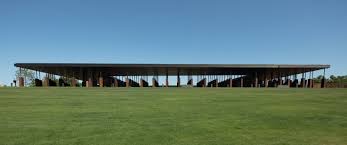
A Lynching Memorial Is Opening. The Country Has Never Seen
My daughter, Leslie Ebonne, and I traveled the few hours from Atlanta to Montgomery,
Alabama during the summer of 2018. We were on a pilgrimage to a museum and memorial that traced the histories of our foremothers and forefathers’. It was a heart, body, mind, and soul’s journey from our theft from Africa to solemn prayerful remembering and re-remembering of their journeys, our daughter–mother journey, of all Americans of African heritage and survivors of the savage and immoral enslavement of human beings in modern history. Two African American women, mother and daughter, lesbian and straight, experiencing and re-remembering the hyper-violent and killing racist, misogynist, and homophobic terror times that our foremothers and fathers lived through and died during. Two African American women who live daily lives of the threats of police, military, and judicial oppression and erasure, along with domestic terrorism. This systemic preservation of white supremacy requires constant ruthless attempts to re-enslave, disenfranchise, overpower, disadvantage, underprivilege and dis-remember.
My family told the stories of enslaved and freedmen of African descent of resistance, defiance and patriotism. They told us about the burning of whole towns and neighborhoods, and the internal immigration of millions of the formerly enslaved and freedmen west and north. One of the stories was the Thibodeaux massacre. The story is the formerly enslaved and freedmen working along poor whites to get better wages and work conditions in the cane fields. They decided to strike and marched toward the sugar mill. The mayor called the governor. The governor sent the state militia. The Knights of the White Camelia and surrounding parish sheriffs and deputies, along with civilians, arrived and fired upon the strikers and surrounded the Colored section of Thibodeaux and slaughtered the inhabitants and burned the neighborhood. The Thibodeaux massacre captured my imagination massacre because it happened about thirty miles from the home and lands of my maternal grandmother, Martha England Ransom’s home near Houma, Louisiana, along Bayou Black. I read everything I could find about this massacre. My reading validated my family’s account except for the number of dead, thirty-sixty in most documents accounts, but hundreds by my family’s account of hunting and killing labor organizers and looting farms owned by black and poor white farms.
It was a hot summer day. After we visited the Legacy Museum, we drove to the Peace and Justice Memorial. On a six-acre site, a large shed without walls. Within the shed has 805 six-foot Corten steel rectangular boxes that hang from steel poles. On the front and back of each steel plate is engraved the state, parish or county, the name or unknown if the name is not known, the date, and if known, the circumstance of the lynching. Individual children, women and men. Son and mother. Mother and son. Families. Small groups. Large groups. Lynched. Burned. Shot Dismembered. Mutilated.
In the beginning, the steel memorial boxes hung at eye level. The memorial floor sloped downward until the memorial boxes hang about the visitor’s head. I searched for the counties and parishes that my family lived in from slavery to the present. Escambia County, Alabama, Adams County, Mississippi, Jackson County Mississippi, Orleans Parish, Louisiana, Lafourche Parish, Louisiana and Terrebonne, Parish, Louisiana. When I reached Terrebonne Parish, I look up and see the date with thirty names, all listed as unknown. Mercifully there was a place to sit along a hip level downward curving wall. I sat in shock and bone marrow horror and grief. My family had not said they had been lynched. Lynched. Lynched while still living? Lynched after they were shot or burned or mutilated?
Why had all the accounts I was told or read only said killed, not lynched as well?
I wept and prayed. I imagined the organizing meetings and marching after moving the young and the old into town for safety. I imagined the guns shooting them down, their depraved mutilation of the dead, hunting down survivors, burning the Colored part of town, hurriedly burying those they didn’t lynch in shallow graves to hide some of their evil rampages.
In the near past. Recently. Now. Maybe. Probably. Actually. Lynching a white pastime again.
Remembering and re-remembering is the awful salve we seek in honor of our ancestors’ resistance, defiance and insistence on the freedom of full and equal U.S. citizenship. Our duty, our joy, is to actualize the miraculous promise of our lives earned by their example and sacrifice. There was no closure there. There was no rest there. There was no peace there–only the promise of peace. There is only remembering and remembering, weeping and weeping, grieving and grieving, honoring and honoring, commitment and re-commitment toward liberty and justice for the living and the dead.
We pilgrimage again.
The antidotes to despair, internalized oppression, and self-annihilation–what saves:
Books
I choose two books to re-read: Fledgling by Octavia E. Butler: 9781583226902 …
And Voyage of the Sable Venus by Robin Coste Lewis …
Music
Holly Near: I am Open https://search.yahoo.com/search?p=holly+near+i+am+open&fr=iphone&.tsrc=apple&pcarrier=Verizon&pmcc=311&pmnc=480
Regina Carter: Southern Comfort: https://open.spotify.com/album/4KpbU96UTx4DB0ukuTE5vu?si=_nwqTiSTQ32wv-Nv0U6nna
Mickey Guyton – Black Like Me (Official Audio) – YouTube
Spoken Word
Poet Laureate Amanda Gorman Fourth of July Boston Pops 2019
Poet Laureate Amanda Gorman June 26, 2020
https://www.cbs.com/shows/cbs_this_morning/video/lFygof12gE3hjeJ8OgOdYf7UGi9sy8NL/youth-poet-laureate-amanda-gorman-on-race-injustice-and-protest/
I go down my to-do list of self-care: avoid contact with police, meditate, eat well, rest well, get exercise, connect, connect, connect, stay home–except for the pharmacy & the grocery & then only with mask and gloves & when there are very few people about. Watch less T.V., but stay informed. Laugh a lot. Channel fear, grief, rage, remembering, honoring, and loving compassion into expression, action and art.
I continue to chronicle these times.
In Joy,
A
© Andrea Canaan, MSW, MFA
https://www.facebook.com/Andrea-Canaan-Author-456010704809232/
 A Writer's Life